
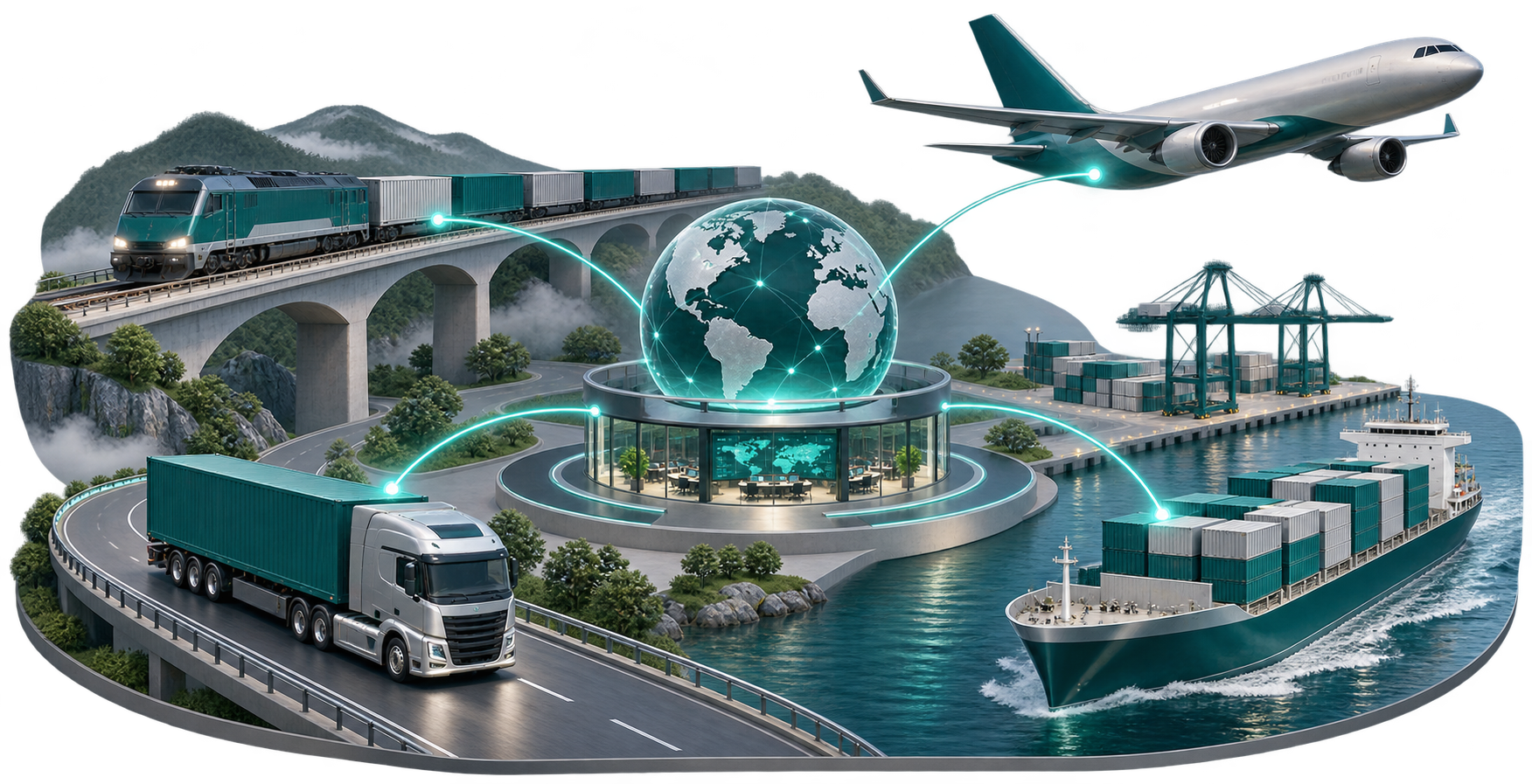
Capabilities across the shipment lifecycle.
Intelligent Document Processing
Automate document reading, data extraction, validation and comparison for faster processing.
Explore ↗Shipment Visibility
Real-time insights into shipment status and location for better decisions.
Explore ↗Risk Watch
Identify possible disruptions early so teams can plan and safeguard shipments.
Explore ↗Drayage and Yard Management
Optimize in-terminal operations and gate-in and gate-out movement.
Explore ↗Carrier Selection and Booking
Find the best carrier based on rates, routes and performance in one place.
Explore ↗Choose the way we work together.
Fixed-Price Project
Best when the scope is clear and cost certainty matters.
Dedicated Team
Best when you want a team that owns your roadmap.
Staff Augmentation
Best when you need specific skills, fast.
Build-Operate-Transfer
Best when you want it built now and owned later.
Logistics technology.
How does AI improve logistics and supply-chain operations?
AI can automate document processing, carrier selection, shipment tracking, ETA prediction, freight auditing, contract management and exception handling.
Which logistics companies can benefit from Cozentus solutions?
The public site lists freight forwarders, 3PLs, 4PLs, carriers, shippers, customs brokers, warehouse operators and enterprises with complex global supply chains.
Can Cozentus build custom logistics software?
Yes. The company describes custom software, legacy modernization, cloud-native applications and solutions tailored to business requirements.
Can Cozentus integrate with existing logistics software?
The site says its solutions can integrate with TMS, WMS, ERP, CRM, customs systems, EDI platforms, carrier APIs and other enterprise applications.
What technologies are used in logistics?
The site lists AI, IDP, machine learning, predictive analytics, real-time visibility, IoT, cloud, RPA, digital twins and advanced data analytics.